Income Tax Refund: Meaning and Process
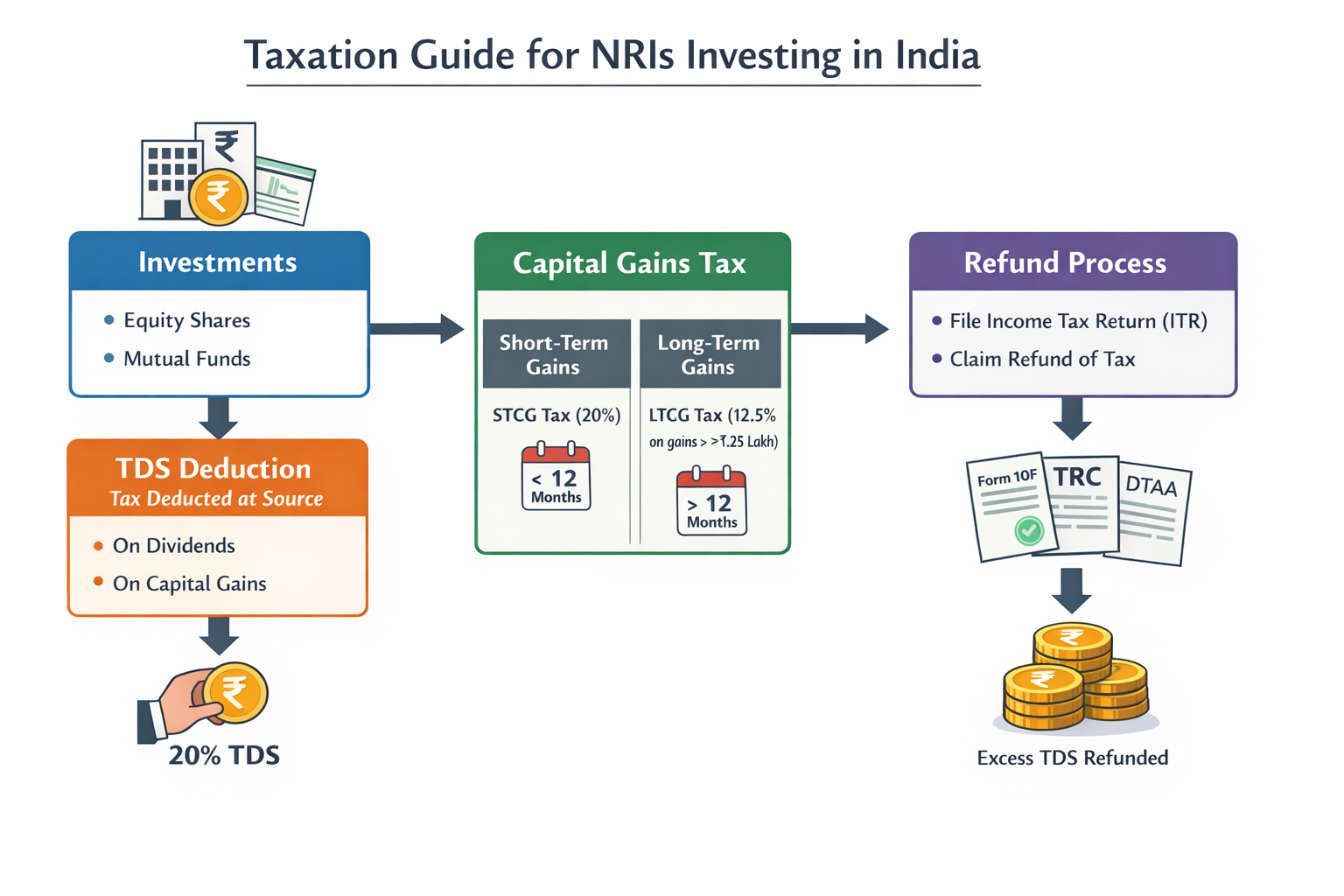
An income tax refund is issued when a taxpayer pays more tax than their actual liability. This excess payment can arise under various heads like self-assessment tax, advance tax, TDS (Tax Deducted at Source), or foreign tax credit.
Refunds are processed after the taxpayer files and verifies their Income Tax Return (ITR). If eligible, the taxpayer receives a notification via SMS or email detailing the refund amount and a refund sequence number, as per Section 143(1) of the Income Tax Act, 1961.
Refunds are either credited directly to the taxpayer's bank account through NEFT or RTGS, or sent via cheque or demand draft to the address registered with the department.
When Can a Tax Refund Be Claimed?
There are several scenarios where a taxpayer may be eligible for a refund. For instance:
- If a taxpayer earns interest from a fixed deposit, banks deduct TDS at 10%. If the taxpayer’s income falls in the 5% tax bracket, they can claim the excess 5% as a refund.
- Refunds may also be claimed when Form 80C is not submitted on time, despite investments in eligible schemes like ELSS, which offer deductions up to ₹1.5 lakh.
- Similar refunds can be claimed for unreported deductions under HRA, medical expenses, or other allowable exemptions.
Eligibility for Income Tax Refund
Refunds may be applicable in the following circumstances:
- Excess advance tax or self-assessment tax paid over the actual tax liability.
- TDS deducted from salary, interest, or dividends exceeds the tax payable.
- Errors in assessment that are later corrected, resulting in reduced tax.
- Double taxation of the same income in India and a foreign country, where a Double Taxation Avoidance Agreement (DTAA) exists.
- Late declaration of eligible deductions or exemptions.
- Recalculation reveals that the actual tax due is less than the amount already paid.
- Excess tax deduction by the employer.
Common Situations and Refund Claim Procedures
| Situation | How to Claim |
| Tax deducted exceeds liability | File ITR with correct bank details (account number, IFSC) for refund credit. |
| Income below taxable limit (under ₹2.5 lakh) | Submit Form 13 to request a Nil or Lower TDS Certificate under Section 197. |
| Fixed deposit income with no taxable income | Submit Form 15G as a declaration to avoid TDS; file ITR if tax is deducted. |
| Senior citizens earning interest (up to ₹50,000) | Submit Form 15H to the bank; if tax is deducted, file ITR to claim a refund. |
Deadline to Claim an Income Tax Refund
An income tax refund must be claimed within 12 months from the end of the relevant assessment year. According to the Income Tax Act, 1961, returns must be filed by 31st July of the assessment year to be eligible for a refund.
The claim involves submitting the income tax return form along with relevant supporting documents. Forms and instructions are available on the official Income Tax portal.
How to Track Your Income Tax Refund Status
You can track the refund status using either of the following:
✅ 1. Income Tax e-Filing Portal
- Log in to incometax.gov.in
- Go to e-File > Income Tax Returns > View Filed Returns
- Select the relevant assessment year
- Check the refund status, processing date, mode of payment, and other details
✅ 2. TIN NSDL Website
- Visit TIN NSDL Refund Status Page
- Enter PAN and assessment year
- View real-time refund status
Interest on Income Tax Refund
If the refund amount exceeds 10% of total tax paid, the taxpayer is entitled to interest under Section 244A at the rate of 0.5% per month. This interest is calculated from April 1 of the assessment year until the refund is processed.
In case of delayed refunds, the Income Tax Department pays interest at 6% per annum from the date of excess tax payment to the date of refund disbursement.
Key Takeaways
- File and e-verify ITR within the deadline for timely refunds.
- Keep bank details and deduction documents updated and accurate.
- Monitor refund status regularly using official portals.
- Understand your rights to claim refunds and interest on delays.
- Stay alert for refund-related frauds—always rely on official sources.
Tracking and claiming income tax refunds is a simple process when done correctly. Being informed and proactive ensures a smooth experience and timely receipt of your excess tax payments.
If you have any further questions or need assistance, feel free to reach out to us at admin@ushmaassociates.com or info@nricaservices.com, or contact us via call/WhatsApp at +91 9910075924.
Stay Updated, Stay Compliant!
Disclaimer: Aim of this article is to give basic knowledge about the topic to people who are not in touch with Indian tax norms. When anybody is dealing with these kinds of cases practically, he shall consider all relevant provisions of all applicable Laws like FEMA/Income Tax/RBI /Companies Act etc.